16 Hardy Forgotten Crops for a Survival Garden Plan
A survival garden is not about panic planting. It is about choosing crops that are hardy, productive, easy to store and useful in everyday cooking, even when weather is difficult. Forgotten crops fit this plan well, because many were chosen by earlier gardeners for exactly those qualities: toughness, reliability and good keeping.
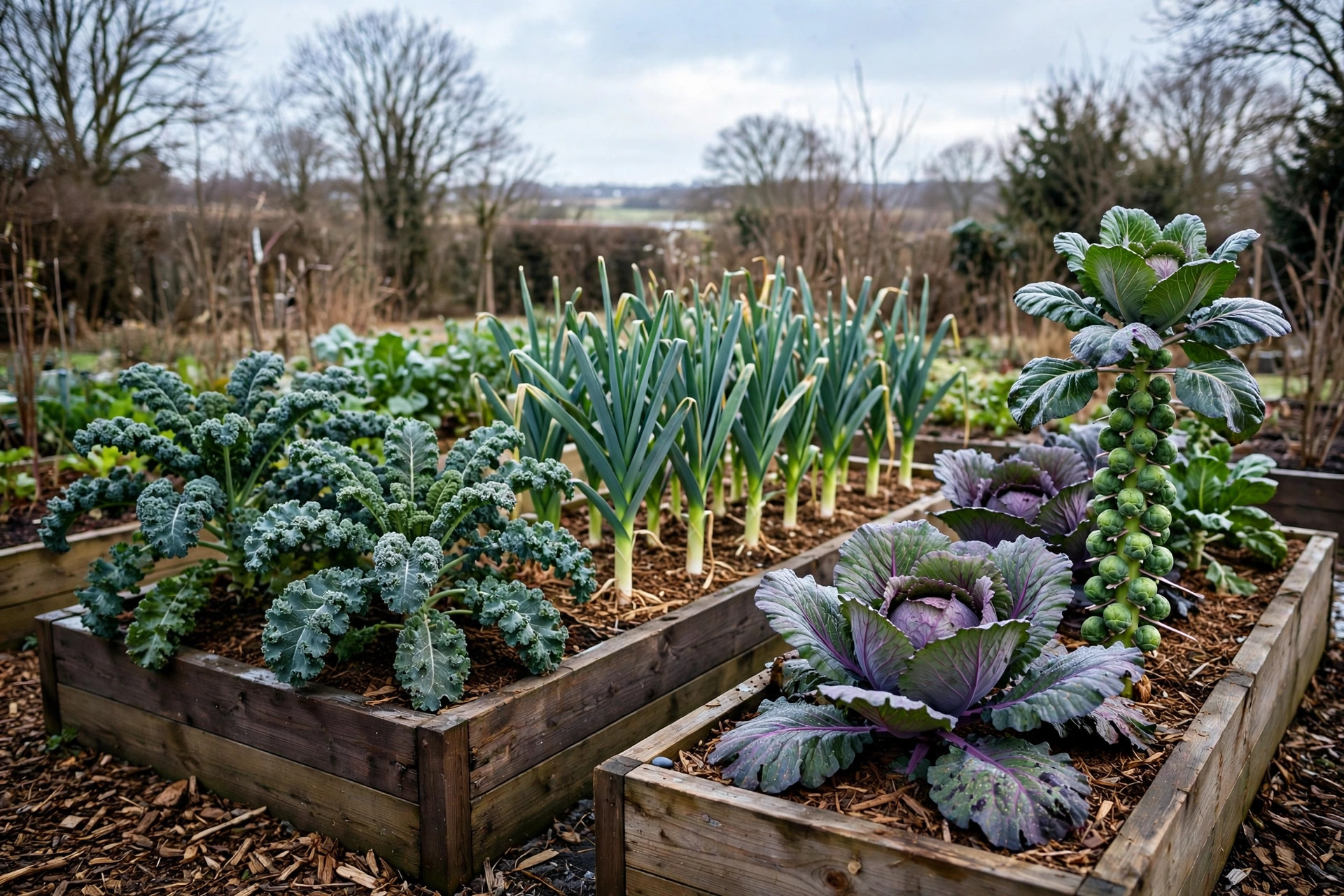
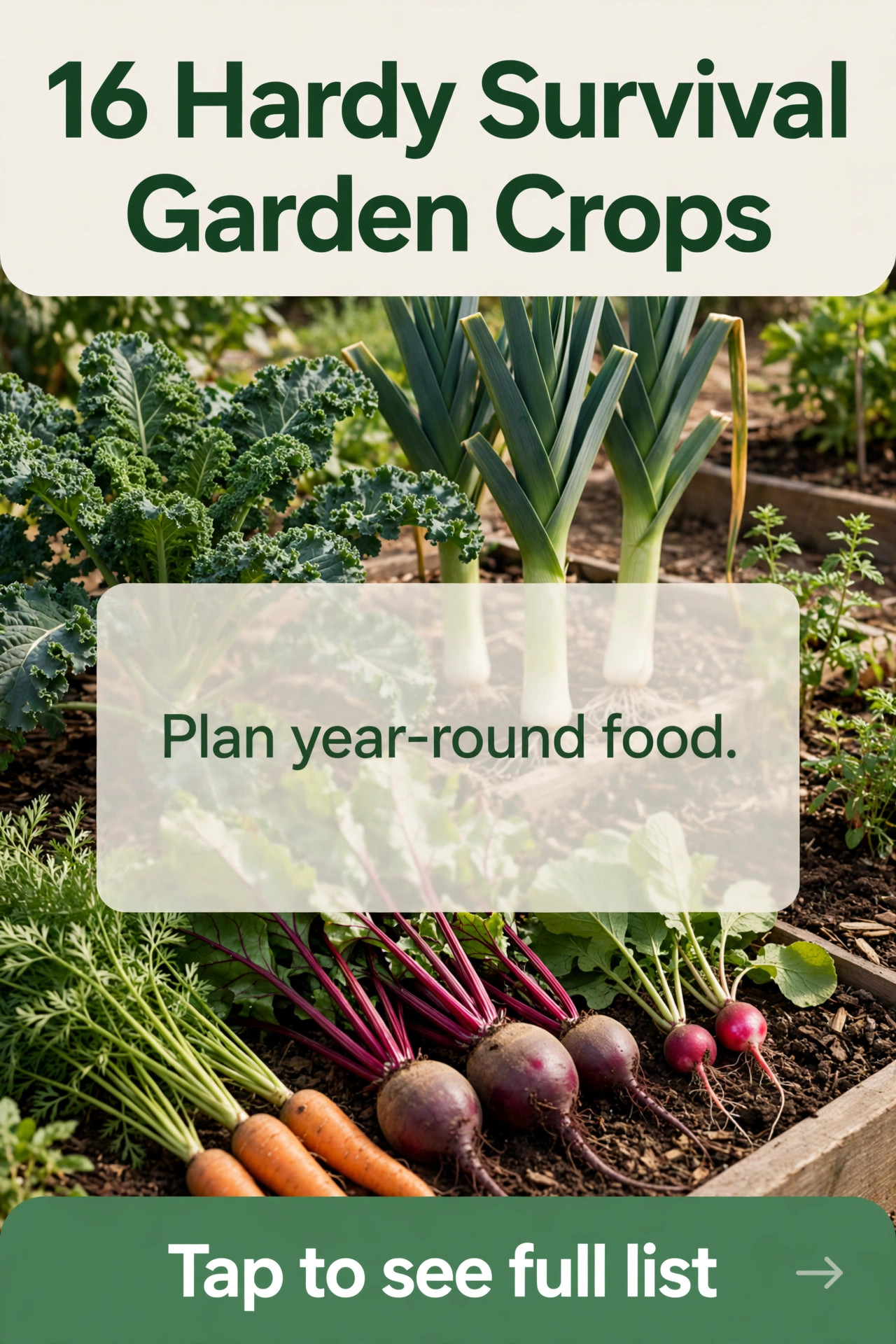
- Siberian Kale: Siberian kale is one of the hardiest leafy crops, tolerating cold and light frost while still producing tender leaves. Pick outer leaves regularly, cook them like other kale, and let plants overwinter for an early spring harvest.
- Leeks: Leeks are slow, steady and very cold tolerant, and they can stay in the ground through winter in many climates. Use them for soups, stews and bakes, and earth them up as they grow for long, pale stems.
- January King Cabbage: January King cabbage is a beautiful purple-tinged cabbage that stands well through winter. Harvest heads as needed, use them for slaw, soups and braised dishes, and leave outer leaves to protect the head.
- Brussels Sprouts: Brussels sprouts improve after frost, becoming sweeter and more tender. Pick sprouts from the bottom of the stem upwards, roast them until crisp, or shred them for salads and stir-fries.
- Perpetual Spinach: Perpetual spinach, a hardy chard type, gives leaves for most of the year with little fuss. It is a good survival crop because it keeps producing after other greens have finished, and it cooks quickly.
- Winter Spinach: Winter spinach varieties are bred to grow slowly through cold months. Sow them in late summer or autumn, pick small leaves in winter, and protect them with a simple cover in hard frost.
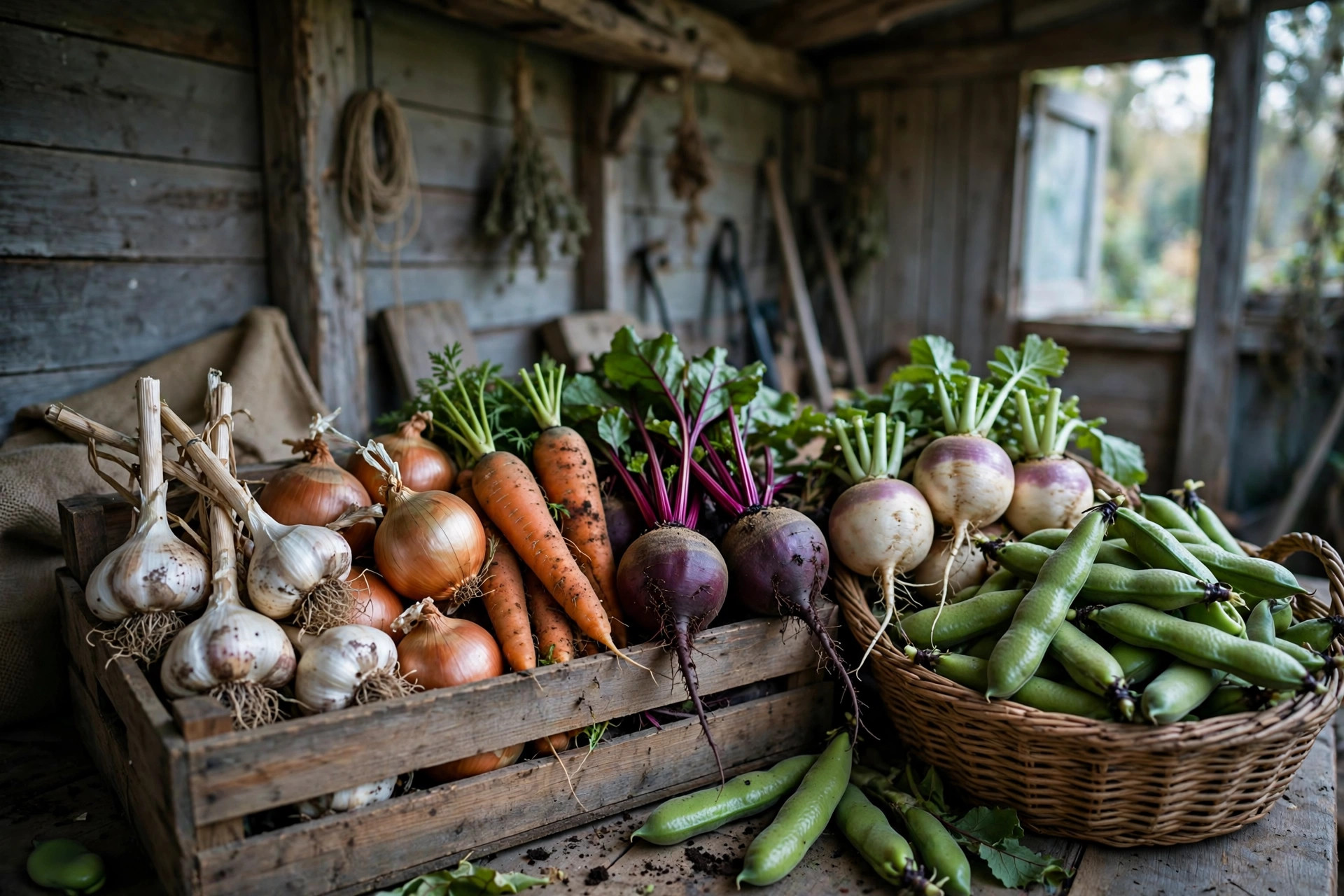
- Garlic: Garlic is planted in autumn, needs little attention, and stores for months after harvest. Plant cloves pointy end up, harvest when leaves yellow, and cure bulbs in a dry, airy place before braiding or storing.
- Onion Sets: Onion sets are small bulbs that grow into full onions with less work than seed. Plant them in spring or autumn, depending on type, harvest when tops fall, and dry them well for long storage.
- Broad Beans: Broad beans, or fava beans, are a hardy, protein-rich crop that fixes nitrogen in the soil. Sow them in autumn or early spring, pick young pods whole or shell older beans, and use them in stews, salads and dips.
- Winter Peas: Winter peas are tough, fast-growing legumes that give fresh pods and shoots in cool weather. Support them with twigs or netting, pick pods young for sweetness, and use the shoots in salads.
- Carrots for Storage: Storage carrots, especially heirloom types, keep well in the ground or in sand through winter. Sow them in loose soil, thin them carefully, and lift only what you need for each meal.
- Beetroots for Storage: Beetroots store well and give both roots and leaves for cooking. Lift roots before hard frost in cold areas, twist off leaves, and store roots in a cool box with damp sand or sawdust.
- Turnips for Storage: Turnips are fast, hardy and useful both fresh and stored. Sow them in late summer for autumn and winter use, and use small turnips fresh while larger ones go into soups and mashes.
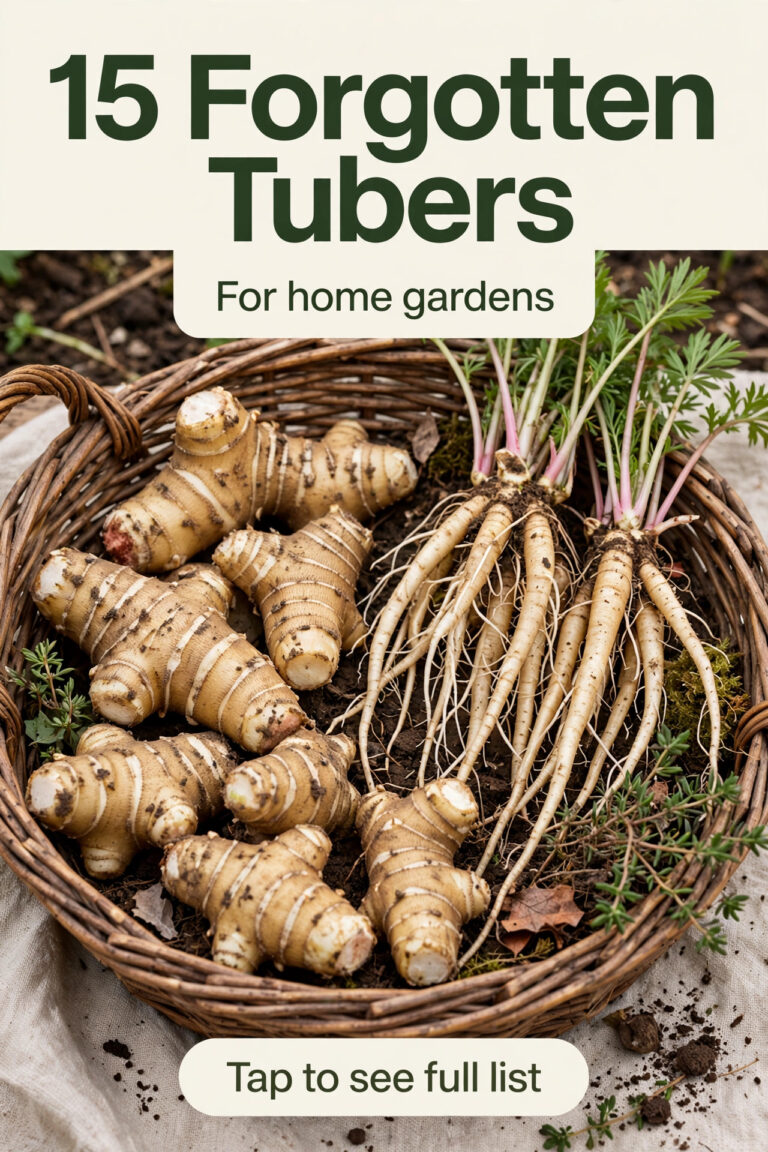
- Sunchokes as a Perennial: Sunchokes return each year and need almost no care once established, which makes them a strong survival crop. Contain them in a bordered bed, harvest through winter, and roast or mash them for filling meals.
- Rhubarb as a Perennial: Rhubarb is a long-lived perennial that needs little yearly work once planted. Harvest stems in spring, use them for desserts and chutneys, and leave the plant alone in summer so it builds strength for next year.
- Perennial Herbs: Perennial herbs like oregano, thyme and sage survive winter in many gardens and add flavour when fresh vegetables are scarce. Plant them near the kitchen, snip as needed, and dry extras for winter cooking.
Practical Tips
Grow a mix of annuals and perennials, so a bad season for one crop does not leave you with nothing. Store crops in more than one way: in the ground, in cool storage, dried, pickled and frozen. Keep seed, tools and a simple garden notebook together, so you can repeat what worked next year. Water deeply and mulch well, because steady moisture helps hardy crops survive dry spells. Save seed from open-pollinated varieties where you can, and label everything with variety and date.
Conclusion
A hardy survival garden is built slowly, one reliable crop at a time. Choose crops that suit your climate, learn how to store them, and cook with them regularly, so the garden becomes a normal part of your food, not just an emergency plan.
FAQs
What makes a crop good for a survival garden? A good survival crop is hardy, productive, easy to store and useful in many meals. Perennials, root crops and legumes score well, because they give food over a long period or store for months.
Should I grow only forgotten crops? No. Mix forgotten crops with reliable modern varieties you already like. That way you get the toughness and flavour of old crops, plus the yield and disease resistance of newer ones.
How much space does a survival garden need? You can start small. Even a few raised beds with kale, leeks, beans, roots and herbs can give useful food. Add more beds as you learn which crops your household actually eats.