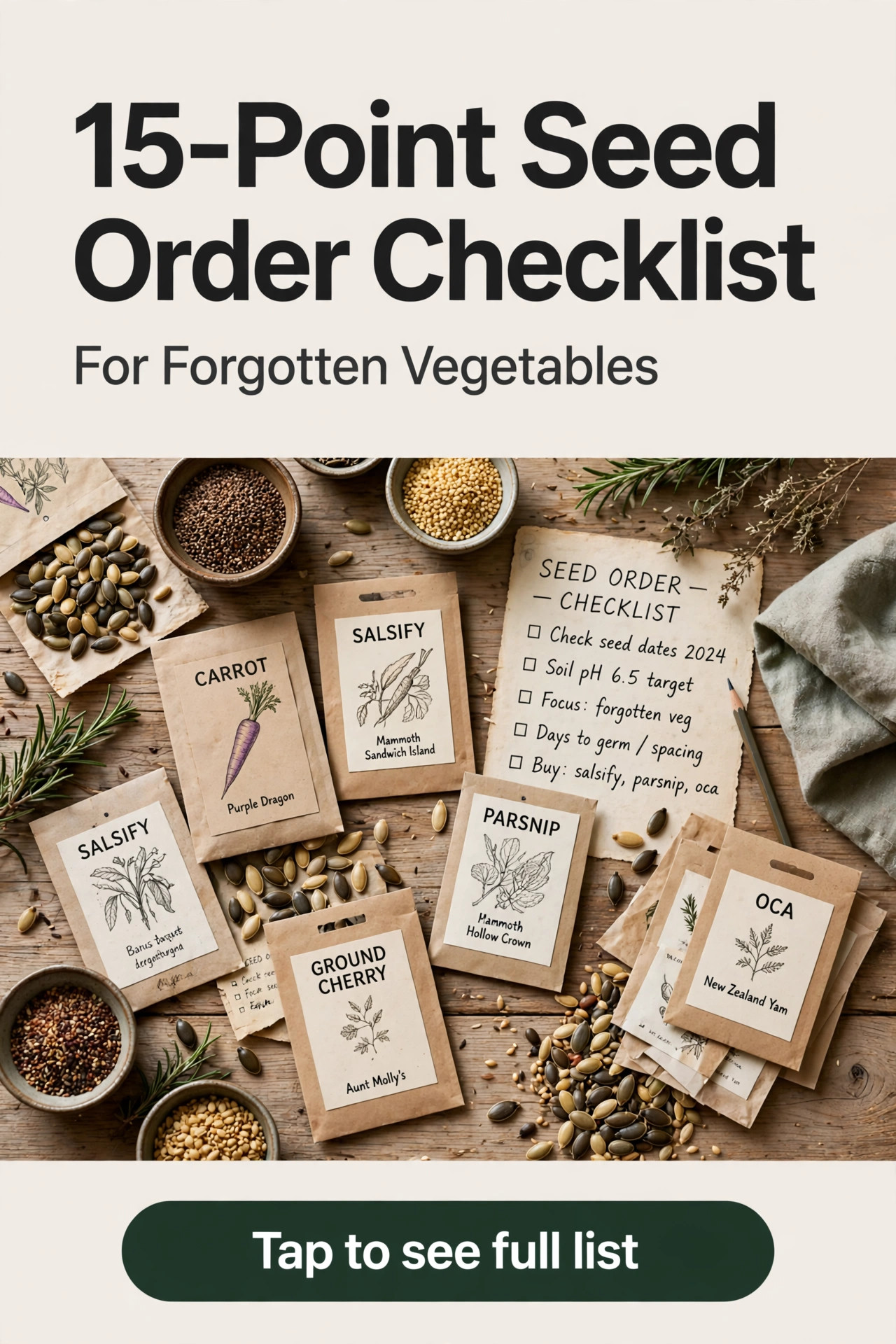
15-Point Seed Order Checklist for Forgotten Vegetables
Ordering seed for forgotten vegetables is exciting, but it is easy to buy too much, too late, or the wrong types for your garden. A short checklist helps you plan beds, choose varieties that suit your climate, and order in time for rare heirlooms to arrive before sowing season. Use this list before you place any order.
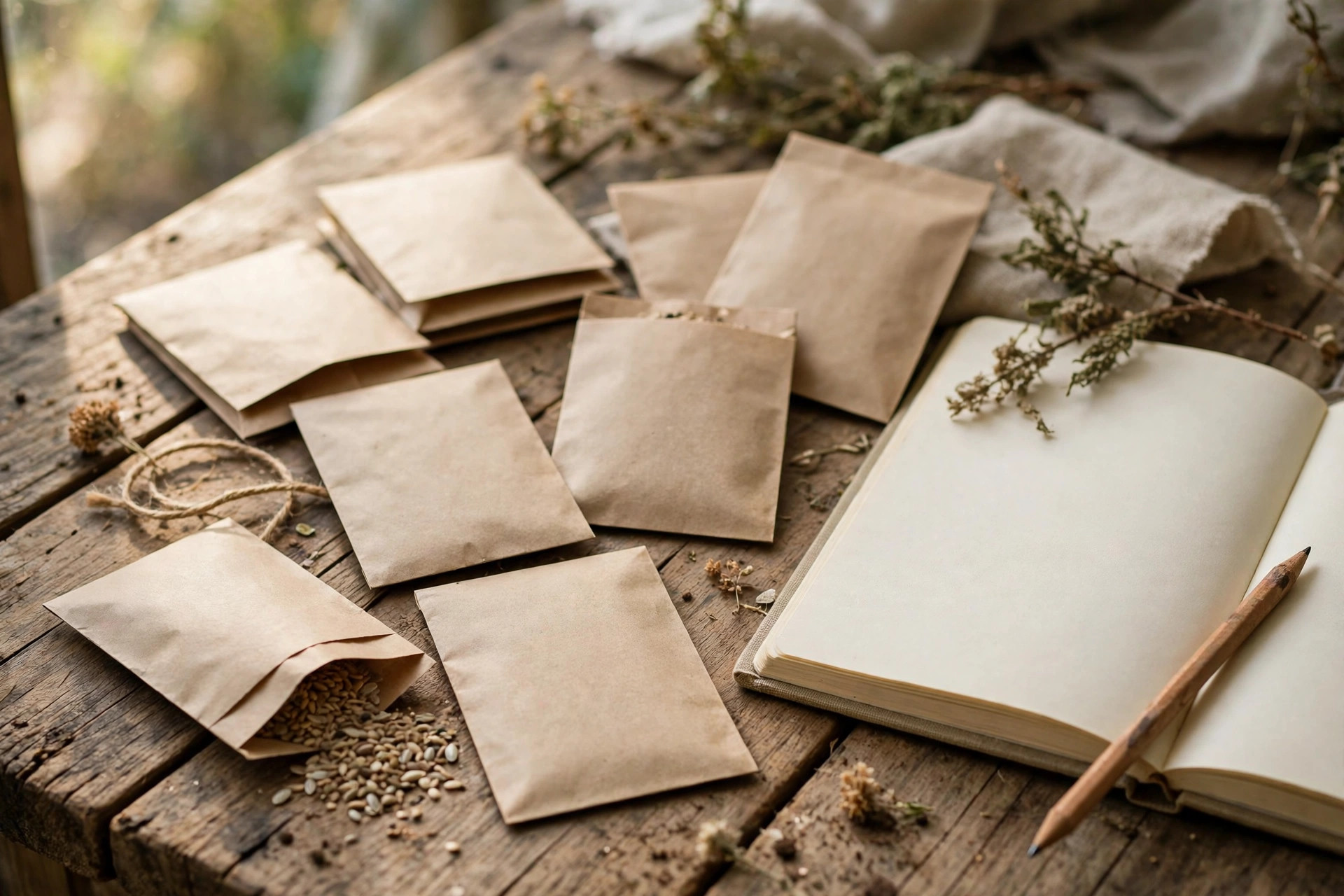
- Audit Last Year’s Seed: Check what seed you already have, including packets, jars and saved seed. Test germination for older seed, throw away damp or mouldy packets, and write down what is still usable so you do not buy duplicates.
- Check Your Growing Zone and Frost Dates: Note your last spring frost and first autumn frost, plus how long your warm season lasts. This tells you which forgotten vegetables have time to mature, and which need starting indoors or a sheltered spot.
- Map Your Beds and Space: Sketch your beds, including sunny and shady areas, containers and perennial beds. Forgotten crops like sunchokes and rhubarb need permanent space, while roots and leafy crops need loose, open soil.
- Decide What Your Household Actually Eats: List the vegetables your household enjoys, and order those first. A rare crop is only useful if someone will cook it, so balance curiosity with everyday favourites like kale, leeks, roots and beans.
- Order Rare Heirlooms Early: Rare heirloom seed can sell out quickly, especially for old roots, tubers and leafy types. Place orders early in the season, and keep a backup choice in mind in case a variety is unavailable.
- Choose Open-Pollinated Seed Where Possible: Open-pollinated seed lets you save seed from your best plants for next year. It also keeps old varieties alive, and it suits gardeners who want a self-reliant, low-cost seed supply over time.
- Match Days to Maturity to Your Season: Read the days to maturity on each packet and compare it with your season length. If a crop needs 120 days and your season is 100 days, start it indoors, choose a faster variety, or grow it in a warm spot.
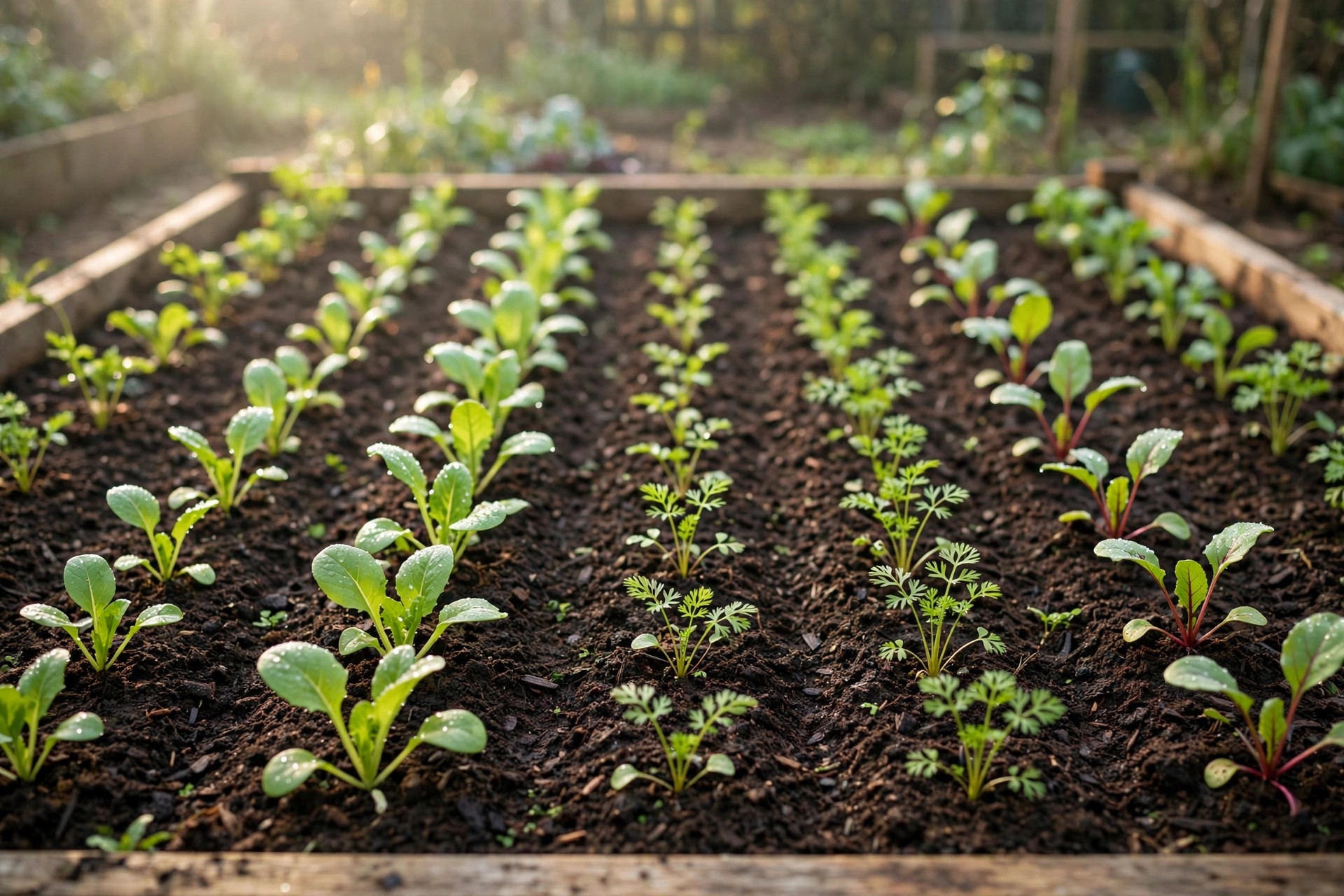
- Plan Succession Sowing: Do not sow everything at once. Plan two or three sowings of fast crops like salads, radishes and leafy greens, so harvests are spread out and you avoid a glut followed by an empty bed.
- Order Tubers and Starts Separately: Tubers, crowns and sets are often sold separately from seed, and they ship at different times. Order potato tubers, asparagus crowns, rhubarb crowns and onion sets early, and note their delivery windows.
- Include Perennial Starts: Add a few perennials to each order, such as rhubarb, sea kale, Good King Henry or herbs. They cost more at first, but they return for years and reduce the amount of seed you need to buy later.
- Try Small Packets First: For a new forgotten vegetable, buy a small packet first. Grow a trial row, taste it, and only order more next year if your household likes it and it grows well in your soil.
- Check Supplier Details and Reviews: Buy from suppliers who list variety, origin and germination information clearly. Check reviews for delivery speed and seed quality, and keep invoices so you can trace a problem if a variety does not grow true.
- Set a Seed Budget: Set a simple budget before browsing catalogues, because it is easy to overspend on interesting varieties. Prioritise staple crops, then add one or two trial varieties within the remaining budget.
- Plan Storage and Labelling: Prepare dry, cool storage and labels before seed arrives. Store packets in airtight jars with the variety and year written clearly, and keep a list of what is stored where.
- Keep a Backup and a Share List: Keep a small backup of your most important seed, and note which varieties you can share with neighbours or a seed library. Sharing helps keep rare varieties in circulation and builds a useful local network.
Practical Tips
Order in one or two batches rather than many small orders, to save on delivery costs and avoid missing items. Keep a garden notebook with sowing dates, germination results and harvest notes for each variety. Sow a little extra seed for crops that germinate slowly, but thin seedlings on time so plants have room. Rotate crops each year, and do not plant the same family in the same bed two years in a row where you can avoid it. Check seed packets on arrival for damage, correct variety and quantity, and contact the supplier quickly if anything is wrong.
Conclusion
A good seed order is a plan, not just a shopping list. With a quick audit, a bed map and a clear budget, you can order forgotten vegetables with confidence, grow them well, and enjoy a garden that is both productive and full of old flavours.
FAQs
When should I order forgotten vegetable seed? Order as early as you can in the season, especially for rare heirlooms and tubers. Early ordering gives you the best choice, time for delivery, and room to start seed indoors if needed.
How much seed should I order for a small garden? For a small garden, small packets are usually enough. Check how many plants each packet gives, allow for germination losses, and remember that many leafy and root crops can be sown in succession from one packet.
Can I save seed from forgotten vegetables? Yes, for open-pollinated varieties, if you follow basic seed-saving advice for that crop family. Some crops cross-pollinate easily, so keep varieties apart or save seed from only one variety of that family each year.